Migration Guide
Applicable roles: Admin user, Member user Last updated: 2026-08-06
If you already had an account on the legacy console, this page clarifies: what happened to your account, whether your balance is retained, whether your old Keys still work, and whether you need to change your API calls.
1. The Three Things You Care About Most
| Your Question | Answer |
|---|---|
| What happened to my account? | The legacy "tenant / account" has been upgraded to admin user with enhanced capabilities -- no re-registration needed |
| Is my balance still there? | Yes. Your balance is retained as-is in the credit balance (total quota pool) |
| Do my old API Keys still work? | Yes. Old Keys remain valid and calls are not interrupted |
This upgrade adjusts the way accounts and permissions are expressed; it does not migrate account data. Your existing balance and API Keys remain unchanged.
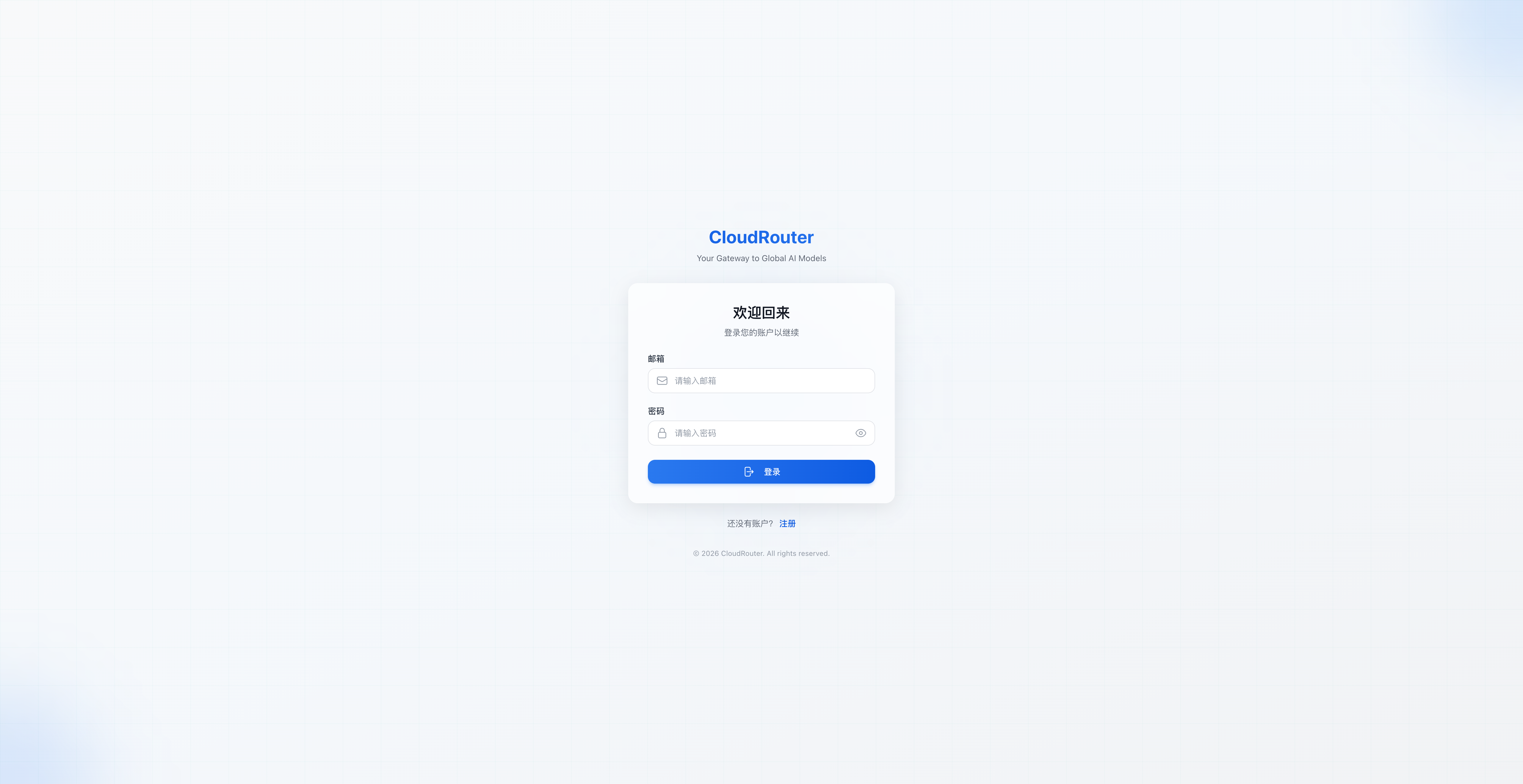
Login page:
2. Changes to the Account Hierarchy
The new version reorganizes accounts into a clear hierarchy of "Organization -- Admin User -- Member -- API Key", similar to AWS's Account -> IAM User -> Access Key:
| Legacy | New | AWS Analogy | Notes |
|---|---|---|---|
| Tenant / Account | Admin user (holds the total quota pool) | AWS Account Owner | The label changed; the account entity and balance remain the same |
| Regular member | Member | IAM User | An independent identity under the organization, with username, delivery email, and other business information |
| API Key | API Key belonging to a specific member or admin user | Access Key | Keys are now explicitly owned by a specific person, used for API call authentication |
Each legacy Key is now explicitly owned by a specific person, just like an AWS Access Key belongs to an IAM User. The Key itself has not changed (format, usage, and bound group all remain the same); the only addition is a management layer of "who owns this Key", so the admin user can see which Keys each member has and how much quota they have consumed.
Old Keys are automatically retained under the original account -- you do not need to take any action. Keys previously created for different members can still be viewed per person in Member Management.
For the detailed account system, see Account System.
3. API Calls: No Changes Needed for Old Keys
The new version introduces call names with group identifiers (e.g., A2C4E6G8/kimi-k3), but the old calling method remains fully compatible:
| Your Call Name | Routing Behavior |
|---|---|
Model name (e.g., deepseek-v4-flash) |
Routes through the group bound to your Key -- same as the legacy version |
With group identifier (e.g., A2C4E6G8/deepseek-v4-flash) |
Directly targets a specific group -- a new, more flexible method (requires the admin user to enable "Group Identifier Routing") |
- Zero changes for old clients and scripts: Continue using model names -- behavior is unchanged.
- Want to use the new method: If the admin user has enabled "Group Identifier Routing", you can copy the full call name with group identifier from the "Call Guide" page. When the toggle is off, calls with a group identifier are rejected, but model-name calls work normally.
For a detailed explanation of calling methods, see Developer Guide - Call Guide and Routing.
4. Experience Changes
4.1 Clearer Key-to-Group Relationship
When creating a new Key, you must select a routing group (the system pre-selects the first available group). Subsequent calls using the model name route through that group -- the same experience as the legacy "one group per Key". Existing old Keys continue to work with their original group and are not affected.
See API Keys and Routing Groups for details.
4.2 Members Automatically Upgraded
Legacy members are automatically upgraded to member users -- no manual rebuilding needed:
- Login method is unchanged (still using the original email + password) -- no re-activation required
- The new version adds business identity fields (username, delivery email) for members; the admin user can edit these on the "Member Management" page
- Keys under legacy members are automatically assigned to the corresponding member user -- no redistribution needed
Only newly created members need to register with an activation code. Existing legacy members are seamlessly upgraded.
4.3 "Model Group" Renamed to "Group"
The legacy "model group" is now uniformly called group:
- Names and configurations remain unchanged -- only the label changed from "model group" to "group"
- Key-bound groups are automatically mapped; old Keys continue to work with their original group
- Group management and maintenance are handled by the platform
4.4 Members Can Create Keys on Their Own
Members can create Keys on the "API Key" page; the routing group can only be selected from groups authorized by the admin user. The admin user can also create and distribute Keys on behalf of members. All Keys under a member share the same quota pool limit, and consumption is deducted from the total quota pool. See Member Management for details.
4.5 Available Model Scope Determined by Two Gates
Which groups / models are available is determined by organization group authorization, member assignment, and Key binding. If you find that certain models are unavailable, check the organization authorization, member assignment, Key binding, and group status in sequence. See Model Access and Group Authorization.
5. Migration Period Notes
- Seamless rollout: The new system supports gradual rollout. During migration, legacy data follows the original logic while new capabilities are progressively enabled -- calls are not interrupted.
- If menu items or account names differ from the legacy version, first check the role mapping on this page. For balance or call anomalies, contact the platform.
- Keep your orders and receipts: Historical orders and payment receipts can be viewed and downloaded under "My Orders". See Invoices and Receipts.
6. FAQ
Q: Do I need to re-register my account? A: No. Your legacy account is automatically upgraded to an admin user -- just log in.
Q: Will my balance be lost during migration? A: No. Your balance is retained in the total quota pool (original account) -- migration does not involve fund transfer.
Q: My scripts still use model names like deepseek-v4-flash -- do I need to change them?
A: No. Model names continue to route through the group bound to your Key -- behavior is the same as the legacy version.
Q: How do I select a group when creating a Key in the new version? A: Select a routing group when creating the Key (the first available group is pre-selected by default). Old Keys are not affected. For new Key configuration, see API Keys and Routing Groups.
Q: Where did my old members go? A: They are now "members" under your organization and can be viewed and managed in "Member Management".